
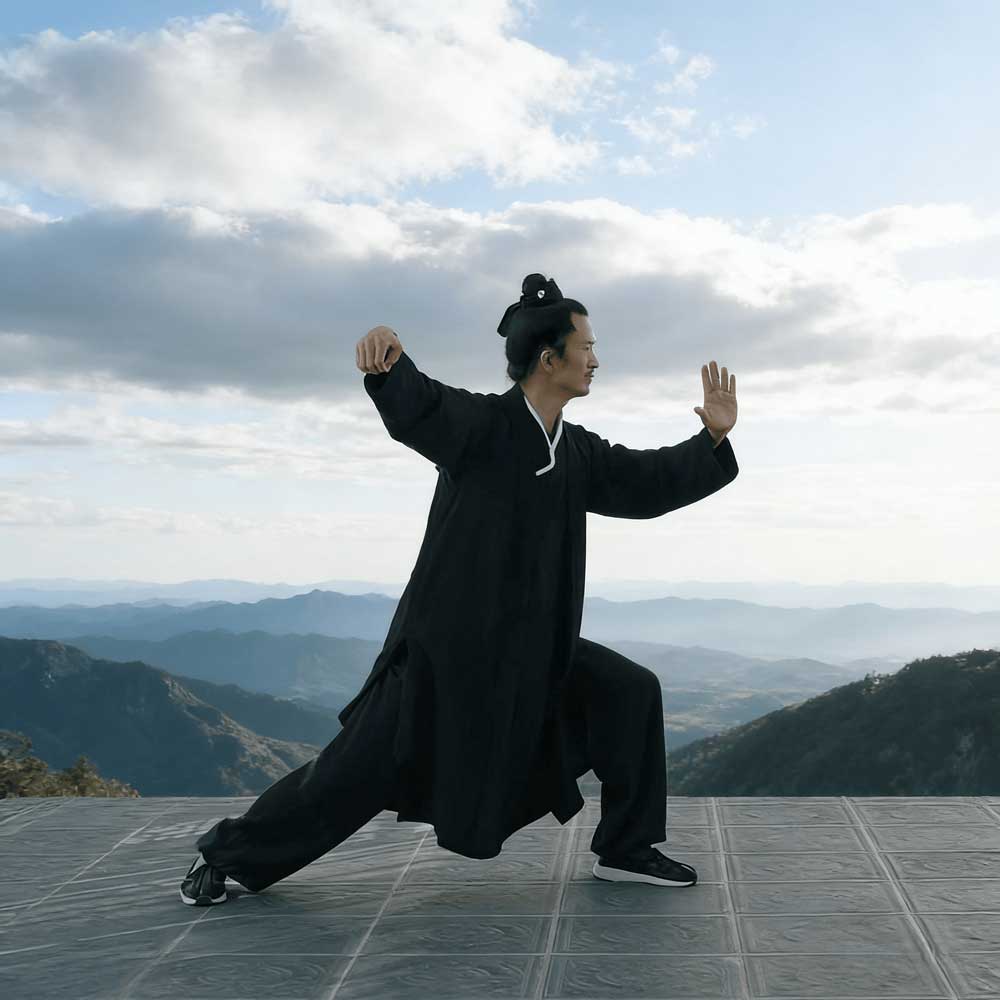
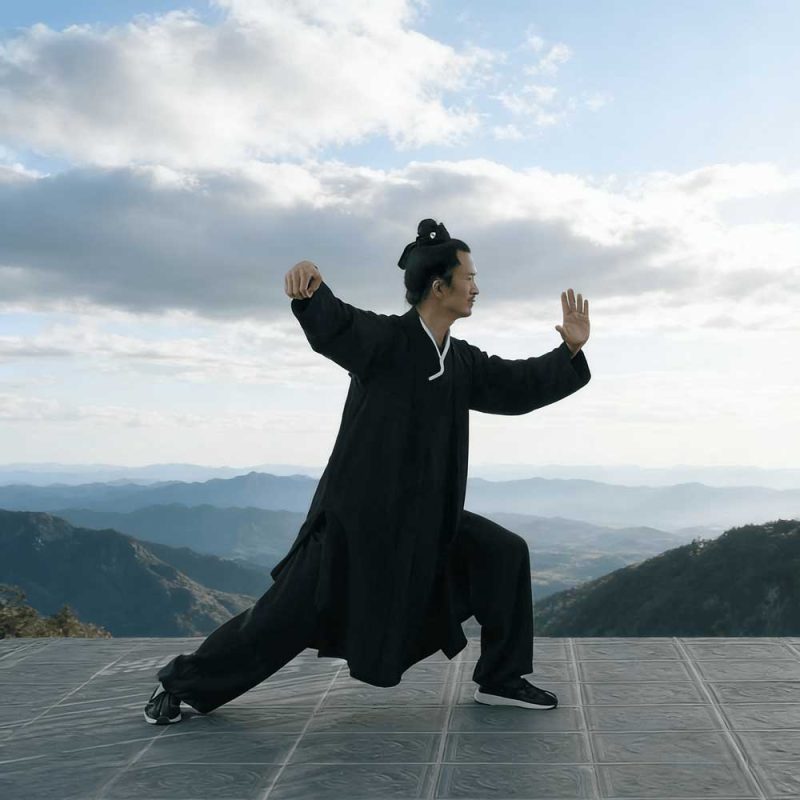
Tai Chi Course
The Way of Health Preservation • Combination of Movement and Stillness
Original price was: $49.00.$36.00Current price is: $36.00.
Theoretical Basis
Based on TCM’s “Yin-Yang balance” theory, Tai Chi’s slow, circular movements regulate the body’s Yin-Yang balance, guide natural Qi and blood flow, and achieve the wellness state of “body-mind unity.”
The Course is including:
Detailed Movement Explanation of the Thirteen Tai Chi Postures-11Videos
- Detailed Tutorials-13 postures
- Detailed Instructions, Movement Explanations
- Chinese Subtitles and English Subtitles, English Voice
The Benefits of Practice Tai Chi:
1.Relax the nervous system
- If a person remains sedentary for long periods of time or focuses on a single task continuously, the whole body will be in a state of tension or stiffness.
- Tai Chi, however, can help calm the mind and gather vital energy, relax the nervous system, and also has a notable effect on relieving dizziness and blurred vision.
2.Promote blood circulation
- Various diseases arise when the body’s meridians are blocked and blood circulation is sluggish.
- After Tai Chi unblocks the meridians, it in turn enhances blood circulation, accelerates metabolism and helps the body eliminate toxins.
3.Unblock the meridians
- Sitting in the office for long hours naturally leads to insufficient physical activity, and excessive mental exertion can cause blockages in the body’s meridians.
- At such times, sticking to Tai Chi practice can achieve a good effect of unblocking the meridians.
4.Activate the repair system
- As people grow older, their innate repair systems gradually degenerate.
- Tai Chi, however, can help regulate both the body and mind, and it boasts notable effects in promoting the harmony of yin and yang as well as restoring bodily balance.
- According to professionals, practicing Tai Chi for just ten minutes a day can help you stay away from a sub-healthy state.
5.Strengthen the respiratory system
- Tai Chi not only emphasizes forms and movements, but more importantly, its essence lies in the methods of breathing and respiration.
- Characterized by deep, long, gentle and slow breathing, it exerts a positive effect on improving the lung’s ventilation and gas exchange functions.
- For long-term practitioners, their respiratory rate will decrease, while both vital capacity and respiratory range will increase.
6.Improve heart function
- Some people have weak heart function simply because they are not fond of exercising.
- Although Tai Chi features slow and gentle movements, it has a marked effect on promoting the flow of qi and blood and enhancing heart function, enabling the heart to beat slowly yet powerfully.
Preparations Before Tai Chi Practice:
- Fully warm up
- Spend 10–15 minutes warming up before practice.
- For instance, take a slow walk for a while, do some joint mobility exercises (such as rotating your neck, circling your shoulders, and moving your wrists and ankles), or perform a few simple stretching moves (such as standing forward bends and side lunge stretches).
- Avoid muscle strains, joint sprains and other injuries.
Precautions for Tai Chi Practice:
1.Time selection
- Avoid practicing on an empty stomach or immediately after meals; the optimal time for practice is one hour after eating.
- The duration of each practice session can be adjusted according to individual conditions, and it is generally recommended to last from 30 minutes to 1 hour.
- What matters most is finding a time and rhythm that suit you, and sticking to the practice persistently.
2.Maintain standard and accurate postures
- The postural requirements must be fully met.
- Otherwise, incorrect postures will not only significantly reduce the exercise effect but also risk causing bodily injury.
3.Wear appropriate clothing
- Choose loose-fitting cotton and linen clothing and avoid tight garments that may impede the flow of qi and blood
4.Attention to the Environment
- Avoid practicing in the cold morning wind, and pay special attention to keeping your cervical spine warm
5.Adjust one’s mindset
- Calm yourself down first when you are emotionally agitated; otherwise, your movements will fail to reach the desired position.
6.Follow the principle of gradual progression
- Do not be eager for quick results.
- If you abruptly increase the intensity and duration of your practice too much, your body will be prone to fatigue and even injury.
7.Relax and wind down after practice
- Spend 5–10 minutes relaxing after practice.
For example, take a slow walk for a while, pat and knead your muscles all over the body, and do a few deep breaths to relax; you can also perform some simple stretching exercises, such as hamstring stretches and waist-twisting stretches, to help relax your muscles and ligaments.
8.Keep Practicing Consistently
- Only long-term persistence can yield good results.
Connotation of the Tai Chi Practice:
- Tai Chi emphasizes the dual cultivation of the body and mind. Its movements are slow, continuous and extremely gentle, and are always coordinated with breathing during practice
- Characterized by slow and soft movements, it embodies the philosophy of “overcoming rigidity with softness”. The movements flow like clouds and flowing water—they may seem gentle on the surface, yet they contain powerful internal strength, representing the highest state of harmony between motion and stillness.
Who It’s For
-
Those seeking physical-mental balance
-
Modern individuals dealing with stress and anxiety
-
Middle-aged and elderly improving balance ability
-
Martial arts and internal style enthusiasts
Course Features
-
Elegant, flowing movements like clouds and water
-
Effectively reduces stress and enhances mental calmness
-
Significantly improves balance and physical coordination
-
Focuses on regulating liver function and soothing emotions
-
Experience meditative tranquility through movement
Services
-
After purchasing the course, please leave your email address, and we will send the course to you via email
-
Course-related questions answered via WhatsApp
-
Ship within 48 hours
2 reviews for Tai Chi Course
Shipping cost is based on weight. Just add products to your cart and use the Shipping Calculator to see the shipping price.
We want you to be 100% satisfied with your purchase. Items can be returned or exchanged within 30 days of delivery.
Digital products are non-refundable, but please reach out if you have issues with your order.
Nora –
I’ve tried quite a few ways to improve my physical wellbeing, but this Tai Chi course is by far the most satisfying one. No high-intensity workouts or special equipment are required—just follow the instructor’s guidance for a daily practice session. Gradually, I’ve noticed a remarkable boost in my body flexibility, and my daily movements have become much more agile. It’s truly a great course that you can stick to in the long run.
Vicky –
I used to try high-intensity workouts, but they ended up hurting my knees. This Tai Chi class, however, is gentle yet effective. After each session, I feel my qi and blood flowing smoothly. Sticking with it has really strengthened my overall physical health. Truly recommend it!